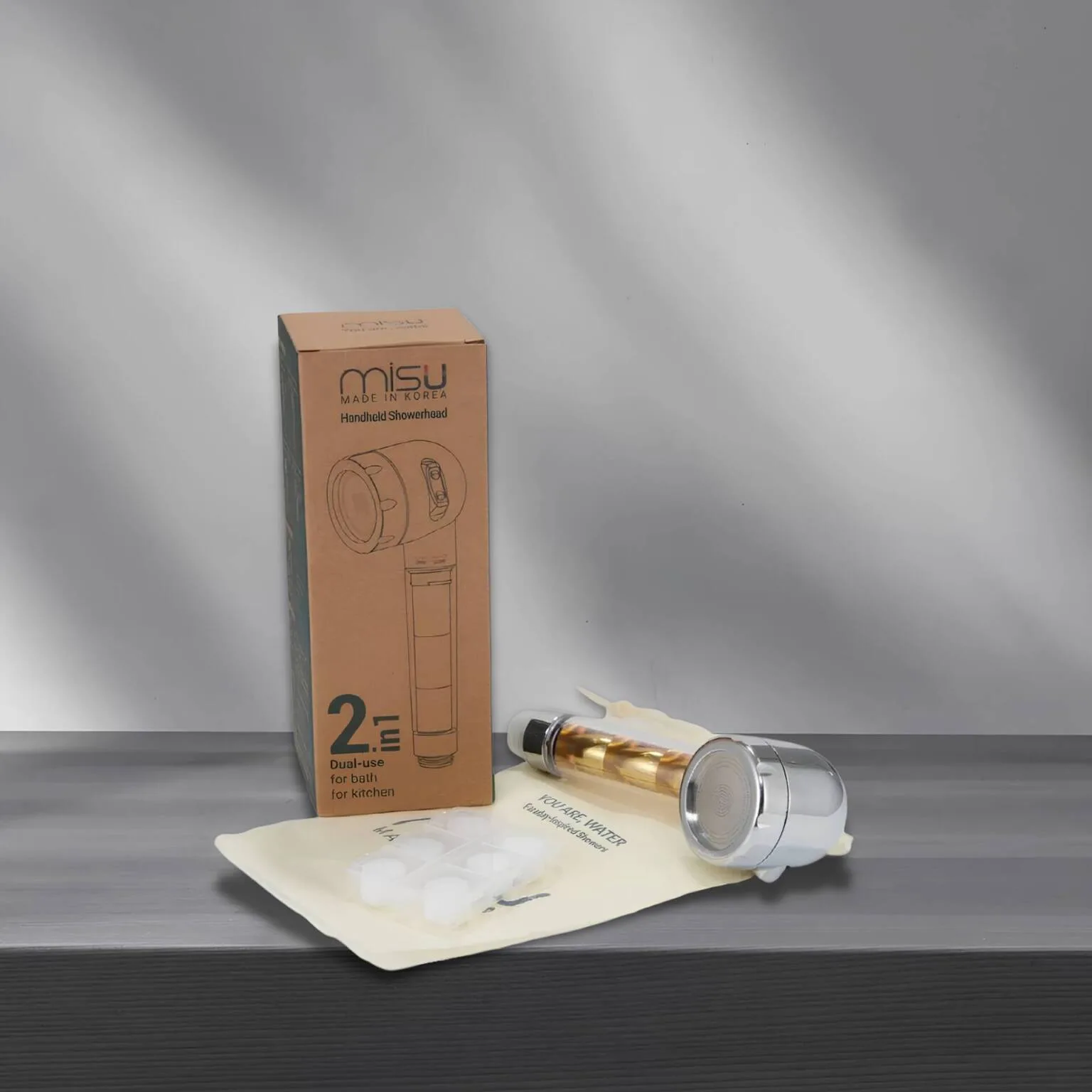
We all enjoy a good shower – whether to energise in the morning or to relax and unwind in the evening. A shower doesn’t involve just water, as water carries numerous substances. On the other hand, there’s something very important to know about yourself and your shower or bath: the skin is the largest organ in our body, and everything that comes into contact with it will, shortly after, be in our bloodstream – and once there, it will reach every part of our body.
Although mains water is treated and therefore complies with current legal standards, it still carries many substances, including trihalomethanes (by-products from water chlorination), heavy metals, and a vast range of harmful substances, even if only in very low concentrations. These include pesticide residues and various emerging chemicals that act as hormone disruptors (endocrine disruptors), among others. [See article “Main Benefits of filtered water for Your Health.”]
These various substances can damage not only the skin and hair but also our overall health and well-being. Fortunately, this reality can be improved with a simple and accessible solution: the use of filtered water, meaning purified water, in the shower.
What Is Filtered Water?
Filtered water is water that has undergone one or several processes to remove solid particles and harmful substances contained within it, such as chlorine derivatives, heavy metals, and other chemicals. Normally, filters for the shower also retain a high percentage of bacteria, fungi, and viruses, even though these microorganisms are eliminated during the chlorination (addition of chlorine) process of the public water supply.
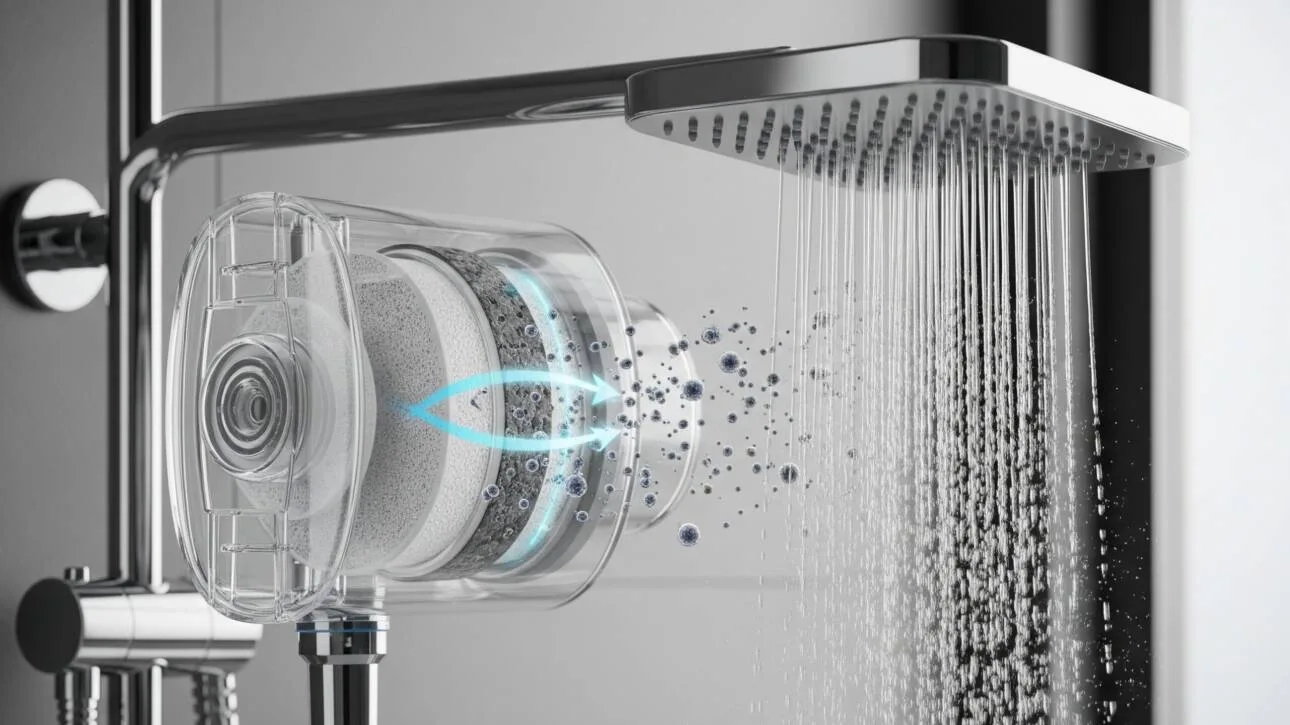
Water filtration systems have several stages, the first being a mechanical filter responsible for retaining sediments, microplastics, and suspended dust. Regarding the removal of trihalomethanes and heavy metals, there are various filtration systems, usually combined, such as activated carbon; other adsorbent substances (chemical capture of substances through reaction; oxidation-reduction systems); magnetic circuits (for example with copper, magnetite, mineral spheres); high-pressure circuits conditioned by the tiny pore sizes of the shower outlet; among others.
Filtered water is not only safer water but also becomes softer and more pleasant for both the skin and hair.


Conjunctivitis can also be caused by infectious agents – infectious conjunctivitis – and toxic agents (in the workplace, chemical accidents) – toxic conjunctivitis. These two types of conjunctivitis can be more serious if they are not diagnosed early and treated effectively.
Advantages of Using Filtered Water in the Shower
As mentioned before, tap water, although potable, contains numerous harmful chemical substances (chlorine derivatives, heavy metals, pesticides, and emerging chemicals) — see the article “Main Benefits of Filtered Water for Your Health.”
Among these, the most studied over the past five decades are trihalomethanes, due to their carcinogenic properties (i.e., ability to induce tumor formation), their disruption of reproductive hormonal functions, and their direct toxicity to the kidneys and liver.
Trihalomethanes (THMs) can enter the bloodstream either through the skin or by inhalation of the steam from the shower (or bath) — and the higher the water temperature, the greater the concentration of THMs in the blood, as demonstrated in scientific studies.
Moreover, inhaling chlorine present in the steam of the shower can have a negative respiratory impact on sensitive individuals, especially those with asthma. These substances not only affect the skin and hair but can also worsen conditions such as eczema, psoriasis, or skin allergies.


By installing a filter on the shower, not only do you make the shower safer by reducing contact with these toxic substances harmful to health, but you also give your skin and body a break from these daily aggressions. The skin becomes softer, the hair less dry and brittle, and the overall feeling after the bath is much more pleasant.
For those with sensitive skin or young children, the difference can be noticeable. Filtered water improves the bathing experience, promoting not only physical comfort but also emotional well-being, making the shower a moment of true care.
Practical and Health Benefits of Using Filtered Water in the Shower
Using filtered water in the shower not only protects us from the harmful effects of trihalomethanes (and countless other chemicals), but also offers a range of practical benefits. A shower with filtered water, free from chlorine smell, provides comfort and well-being; the water feels softer, and the skin becomes more hydrated and smooth. This is a huge benefit for sensitive and reactive skin, as well as for babies.
Filtered water makes the shower safer by helping to prevent skin irritation — itching and redness. Since the water is “cleaner,” there is less need for creams, conditioners, or post-shower lotions, which represents long-term savings and a reduction in environmental impact due to fewer hygiene product containers.
On a daily basis, showers with filtered water are gentler, more relaxing, and beneficial for the body, respiratory system, and mind. Ultimately, taking care of the water we wash with is also a way to care for our health and emotional well-being.


How to Install a Filter in the Shower
There are several types of filters for showers/bathtubs available on the market. They are usually easy to install by the user, without needing a professional. The most common ones can be easily attached between the showerhead and the hose, fitting the existing plumbing.
Every filter has a maximum filtration capacity to ensure the quality of the filtered water, requiring regular maintenance. This consists only of replacing the filter cartridges, typically every three to six months, depending on the water quality and how often the shower is used.
Conclusion
Recapping, there are countless benefits of taking a shower with filtered water: 1) invaluable health protection benefits by eliminating toxins with carcinogenic actions, hormone-disrupting effects, and kidney and liver toxicity; 2) protection against respiratory sensitivity, such as asthma; 3) reduction or elimination of skin irritation in children and sensitive individuals, as well as in cases of contact allergies and eczema; 4) improved hydration of skin and hair; 5) sensation of softness, comfort, and well-being; 6) absence of the unpleasant chlorine smell; 7) savings on personal hygiene products; 8) environmentally friendly benefits as mentioned above.
The filtration of filtered water from the shower is a simple, very affordable investment with highly significant benefits for health, comfort, and sustainability. Discover for yourself how filtered water in the shower protects your health, promotes well-being, and therefore improves your daily hygiene routine.
If you enjoyed this article, also check out other articles on this blog about water quality. Taking care of yourself starts with the simplest choices — like the quality of the water you use every day. Why not give it a try? There are many solutions available on the market.
Bibliography
- Laranjeiro, M.P.; Baltazar, A.L. (2020). Presença de trihalometanos na água: potenciais riscos. Acta Portuguesa de Nutrição, 21:32-37. http://dx.doi.org/10.21011/apn.2020.2107
- Chowdhury, S.; Champagne, P. (2009). Risk from exposure to trihalomethanes during shower: Probabilistic assessment and control. Science of The Total Environment. 407(5):1570-8. https://doi.org/10.1016/j.scitotenv.2008.11.025
- Weisel C.P.; Chen W.J. (1994). Exposure to Chlorination By-Products from Hot Water Uses. Risk Analysis; 14(1):101-6. https://doi.org/10.1111/j.1539-6924.1994.tb00032.x
- Medeiros, L.C.; Alencar, F.L.S.; Navoni, J.A.; Araújo, A.L.C.; Amaral, V.S. (2019). Toxicological aspects of trihalomethanes: a systematic review. Environ Sci Pollut Res Int.; 26(6):5316-5332. https://doi.org/10.1007/s11356-018-3949-z
- Gardner, H.; Cox, M.; Sills, R.C. (1999). Drinking Water Disinfection Byproducs: Review and Approach to Toxicity Evaluation. Environmental Health Perspectives, Vol 107, Supplement t. https://ehp.niehs.nih.gov/doi/pdf/10.1289/ehp.99107s1207
- Ye Du, Xiao-Tong Lv , Qian-Yuan Wu , Da-Yin Zhang , Yu-Ting Zhou , Lu Peng , Hong-Ying Hu. (2017). Formation and control of disinfection byproducts and toxicity during reclaimed water chlorination: a review. Journal of Environmental Sciences, 58: 51-63. https://doi.org/10.1016/j.jes.2017.01.013
- Melnick, R.L.; Dunnick, J.K.; Sander, D.P.; Elwell, M.R.; and Barrett, J.C. (1994). Trihalomethanes and Other Environmental Factors That Contribute to Colorectal Cancer. Environmental Health Perspectives, 102.6-7: 586-588. https://ehp.niehs.nih.gov/doi/pdf/10.1289/ehp.94102586.
- Villanueva, C.M.; Cantor, K.P.; Grimalt, J.G.; Malats, N.; Silverman, D.; Tardon, A.; Garcia-Closas, R.; Serra, C.; Carrato, A.; Castaño-Vinyals, G.; Marcos, R.; Rothman, N.; Real, F.X.; Dosemeci, M.; Kogevinas, M.; (2007). Bladder cancer and exposure to water disinfection by-products through ingestion, bathing, showering, and swimming in pools. Am J Epidemiol, 165(2):148-56. https://doi.org/10.1093/aje/kwj364
- Affornalli, B.A.; Macetti, N.M.; Marques, C.M.; Andrade, D.P.; Mello, R.G. (2021). Correlação entre Trihalometanos e o Desenvolvimento do Câncer de Bexiga. Revista Brasileira de Cancerologia, 67.4. https://doi.org/10.32635/2176-9745.RBC.2021v67n4.1588